
Should Manufacturers Have a Dedicated Distributor Enquiry Page? A Practical Guide
Most manufacturer websites treat all inbound contact the same way. One form, one inbox, one queue. That approach works tolerably well when the volume is low and the enquiry types are similar. It stops working the moment you add a serious distribution channel to your growth plan.
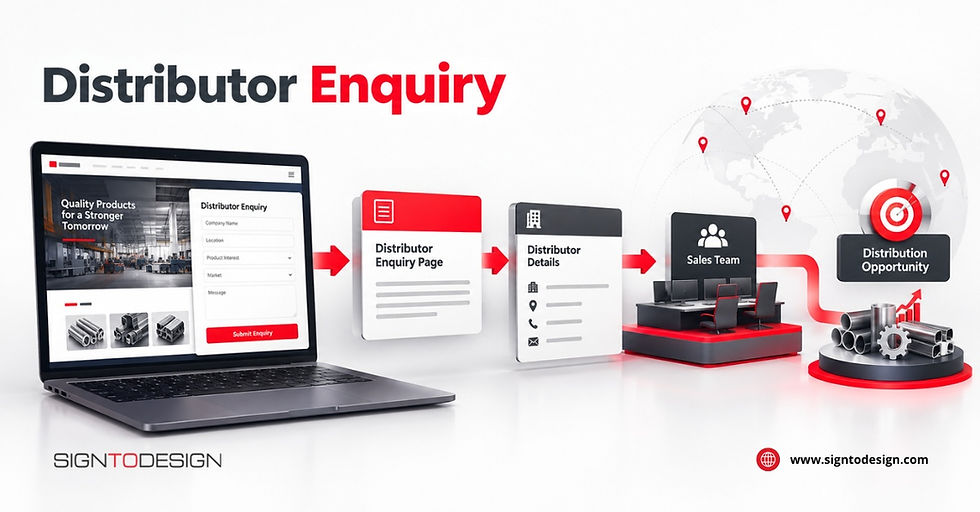
A distributor enquiry is not the same as a product enquiry. The questions are different, the decision timeline is different, the person handling it on your side is different, and the information that visitors need before they submit anything is different. Treating them identically costs you leads and wastes your sales team's time. Implementing a manufacturer distributor enquiry page resolves this bottleneck.
What a Distributor Visitor Actually Needs
When a potential partner asks how to attract distribution partners, manufacturing leaders must look at the digital touchpoints first. When a prospect lands on your website, they are trying to answer several questions before they even consider making contact. They want to know whether you already have distribution coverage in their territory. They want to understand your minimum order requirements and margin expectations. They want to know whether you offer exclusivity and under what conditions. They want to see whether you have the technical support, documentation, and training infrastructure to help them sell your products effectively.
If your website does not answer any of these questions, the visitor has no basis for deciding whether to enquire. Many will leave without contacting you. Of those who do use your generic contact form, a significant proportion will not provide enough information for your team to qualify them quickly.
What a Dedicated Distributor Enquiry Page Should Contain
A distributor enquiry page is not simply a second contact form with a different heading. It is a short, structured page that does four things:
Confirms the opportunity: A brief, direct statement that you are actively seeking distribution partners in specific regions, sectors, or product categories. This tells the right visitor they are in the right place.
Sets basic qualifying criteria: Without making it feel like a barrier, indicate the kind of partner you are looking for relevant experience, existing customer base, technical capability, and geographic reach. This pre-qualifies the visitor before they submit anything.
Answers the most common questions upfront: Territory policy, exclusivity terms, whether you provide marketing support, and what the onboarding process looks like. A short FAQ or a few bullet points can do this without requiring a brochure download.
Asks the right questions in the form: When considering what a distributor enquiry form contains, it should ask for company name, current product categories handled, geographic coverage, annual turnover band, and the visitor's specific interest. These fields give your sales team enough context to prepare a meaningful first response rather than sending a generic acknowledgement.
Why Routing Matters as Much as the Form
One of the most common failures in distributor lead handling is that the enquiry lands with the wrong person. A sales executive managing day-to-day order fulfilment is not the right person to open a channel partnership conversation. When the routing is unclear, response times slow down, the tone of the first reply is wrong, and a serious distribution prospect concludes you are not ready for the conversation.
A dedicated page allows you to route distributor enquiries directly to whoever owns channel development in your organisation, whether that is a sales director, a regional manager, or a dedicated channel team. That routing can be set up in your CRM or even in a simple email rule. The page makes it possible. A generic form does not.
The SEO Argument for a Standalone Page
Distributors searching for new supplier relationships use specific language. Searches like become a distributor for [product category], distribution partner enquiry [industry], or authorised distributor application are real queries. Having a dedicated manufacturer distributor enquiry page with a clear heading, relevant content, and a properly labelled form gives that page a chance to appear in those searches. A generic contact page has no chance at all.
This is not about gaming search results. It is about understanding how to attract distribution partners manufacturing decision-makers care about, ensuring you are findable by the specific type of buyer you are trying to attract through a channel you have already decided to invest in.
What This Page Should Not Do
A distributor enquiry page should not be a wall of legal terms and conditions. It should not require a visitor to download a PDF before they can understand your basic proposition. It should not ask for twenty fields of information before you have established any relationship. And it should not look like it was added as an afterthought to an existing contact page.
Keep it focused. The goal is to attract the right kind of distributor, give them enough information to self-qualify, and make the enquiry process feel like the beginning of a professional conversation rather than a compliance exercise.
A Practical Starting Point
If you are building this page for the first time, start with these elements:
A clear heading that names the opportunity.
Two or three sentences on what you are looking for in a distribution partner.
Four to six bullet points covering your key terms and support offer.
A short FAQ addressing territory, exclusivity, and minimum order questions.
A form with no more than eight fields mapping out what a distributor enquiry form contains.
Review the page every six months. The questions your sales team gets asked most often in early distributor conversations are the questions your page should be answering before anyone picks up the phone.
If you want to understand how your current website handles distributor and channel enquiries compared with what serious buyers expect, the Website Growth for Manufacturing Companies programme at SignToDesign is built around exactly that kind of structured review.
FAQ's:
Why do manufacturers need a dedicated distributor enquiry page?
Distributor enquiries require different decision timelines, qualification criteria, and internal routing compared to standard customer product inquiries. Treating them identically costs manufacturers leads and slows down sales follow-ups.
What should a manufacturer distributor enquiry form contain?
A distributor enquiry form should ask for company name, current product categories handled, geographic coverage, annual turnover band, and the prospect's specific interest or territory target.
How do dedicated distributor pages help B2B manufacturing SEO?
Distributors search using specific queries such as 'become a distributor for [category]' or 'authorised distributor application'. A dedicated page optimized for these terms helps manufacturers appear in high-intent channel partner searches.


Comments