
B2B Manufacturing Website Optimization: Key Areas to Improve for Better Business Results


A manufacturing website should do more than look professional. It should clearly explain what your business does, who you serve and why a potential buyer should contact you. Effective B2B manufacturing website optimization helps turn your website into a useful sales and marketing asset rather than simply an online brochure.
Many manufacturers have strong products, technical expertise and years of industry experience, yet their websites fail to communicate these strengths. Visitors may struggle to understand capabilities, find relevant specifications or take the next step. SigntoDesign Pvt Ltd works with businesses to identify these gaps and improve how their websites support visibility, credibility and enquiries.
This guide explains the key areas manufacturers should review, from messaging and user experience to technical content, SEO and conversion paths.
Table of Contents
|
1. Review Your Core Messaging
A visitor should understand your business within seconds. One of the first steps in B2B manufacturing website optimization is reviewing whether your messaging answers the most important questions.
Focus on:
What do you manufacture or provide?
Which industries do you serve?
What capabilities or specialisms differentiate you?
What problems can you help customers solve?
Avoid vague statements such as “quality solutions for every industry”. Replace them with specific information about materials, processes, production capabilities or applications.
How can manufacturers improve their website?
Manufacturers can improve their website by making their products, capabilities and target industries easier to understand. Clear headlines, logical navigation, technical information and relevant calls to action help visitors move from initial research towards an enquiry.
2. Improve Navigation and User Experience
Good website design is not only about appearance. Buyers may arrive looking for a specific product, process, industry application or technical capability.
Useful website improvement strategies for manufacturers include:
Grouping related products logically
Creating clear menus and internal links
Making technical documents easy to find
Improving mobile usability
Reducing unnecessary clicks
A well-structured website helps both users and search engines understand the relationship between different pages. This is an important part of B2B manufacturing website optimization, particularly for businesses with broad product ranges.
3. Strengthen Product and Service Pages
Thin product pages are a common weakness on manufacturing websites. A product name and a short description may not provide enough information for a serious buyer.
Consider including:
Product specifications
Materials and dimensions
Applications and use cases
Manufacturing processes
Quality standards or certifications
Downloadable technical information
B2B manufacturing website optimization for technical buyers
Technical buyers often need detailed information before contacting a supplier. Pages should answer practical questions while remaining easy to scan. SigntoDesign Pvt Ltd recommends balancing technical depth with clear language so that engineers, procurement teams and decision-makers can all understand the offering.
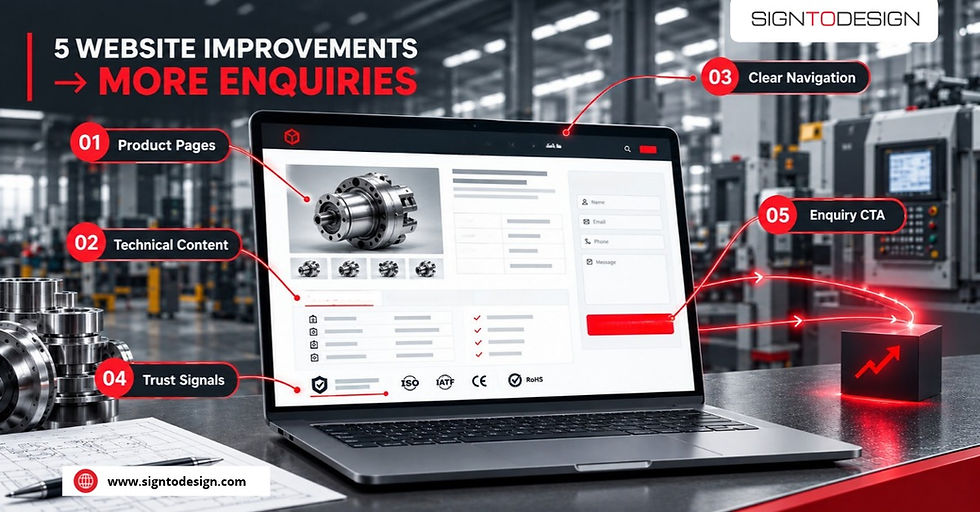
Website Element | Basic Approach | Improved Approach |
Product pages | Brief description | Specifications, applications and FAQs |
Navigation | General categories | Product and industry-focused pathways |
Calls to action | “Contact Us” only | Relevant enquiry and consultation options |
Trust signals | Generic claims | Certifications, case studies and evidence |
4. Use SEO to Improve Discoverability
A strong website is less useful if potential customers cannot find it. B2B manufacturing website optimization should include search engine optimization that reflects how customers search.
Start with:
Keyword and search-intent research
Clear page titles and headings
Industry and application pages
Internal linking between related topics
Helpful FAQs based on real buyer questions
Rather than creating content only around broad keywords, consider the language customers use when researching processes, materials, suppliers and applications.
These website improvement strategies for manufacturers can also strengthen topical relevance. The goal is to create genuinely useful content, not simply repeat keywords.
5. Build Trust With Proof and Expertise
Manufacturing purchases can involve long sales cycles and significant investment. Your website should therefore provide evidence that supports buyer confidence.
Useful trust-building elements include:
Case studies
Certifications and quality standards
Manufacturing capabilities
Industry experience
Client testimonials, where appropriate
Team or facility information
How can manufacturers improve their website for credibility? By replacing unsupported claims with specific evidence. For example, explain your production capacity, inspection process or industry experience rather than simply stating that you offer “high quality”.
6. Improve Conversion Paths and Website Performance
Visitors should know what to do next. Every important page should offer a relevant action, whether that is requesting a quote, discussing a project or downloading technical information.
Key areas to review include:
Clear calls to action
Simple enquiry forms
Fast-loading pages
Mobile responsiveness
Accessible contact details
B2B manufacturing website optimization should connect visibility with action. More traffic alone does not guarantee better business results if visitors cannot easily progress towards a conversation.
Pro Tip
Review your website from the perspective of a first-time buyer. Can they understand your capabilities, find relevant information and contact the right person without needing to search extensively?
7. A Practical Website Improvement Checklist
Before planning a major redesign, review these areas:
Clearly explain your products and capabilities
Organise navigation around buyer needs
Improve important product and service pages
Add technical, industry and application content
Review SEO fundamentals and internal linking
Add relevant proof, certifications and case studies
Test enquiry journeys on desktop and mobile
Monitor performance using analytics and search data
SigntoDesign Pvt Ltd can support this process by helping manufacturers identify content, structure and usability gaps that may limit website performance.
Conclusion
Effective B2B manufacturing website optimization is not about changing colours or adding more pages without a clear purpose. It involves improving how your business communicates, how easily buyers find information and how confidently they can take the next step.
Start by reviewing your website's messaging, navigation, product content, search visibility, trust signals and conversion paths. Small improvements in these areas can make the website more useful for both prospective customers and your internal sales team.
The best website improvement strategies for manufacturers are based on real customer needs, search behaviour and business priorities. If your current website no longer reflects your capabilities or supports your growth goals, SigntoDesign Pvt Ltd can help you assess the gaps and identify practical opportunities for improvement. Contact the team to discuss how a structured website review can support your next stage of growth.
FAQs
1. What is B2B manufacturing website optimization?
B2B manufacturing website optimization is the process of improving a manufacturer's website so buyers can find information, understand capabilities and take relevant actions more easily. It can include content improvements, SEO, technical performance, navigation, user experience and stronger conversion paths.
2. How can manufacturers improve their website?
Manufacturers can improve their website by clearly presenting products, services, capabilities and industry expertise. They should also improve navigation, add useful technical information, strengthen calls to action and ensure important pages are easy to find through search engines and internal links.
3. Why is technical content important on a manufacturing website?
Technical content helps buyers evaluate whether a manufacturer can meet their requirements. Specifications, materials, processes, applications and certifications can answer early-stage questions, reduce uncertainty and help sales teams engage with more informed prospects.
4. Should manufacturers focus on website redesign or improvement?
The right choice depends on the current website. If the structure and technology remain effective, targeted improvements may be sufficient. If the website is difficult to navigate, outdated or unable to support business requirements, a more comprehensive redesign may be appropriate.
5. How does SEO support manufacturing businesses?
SEO helps relevant pages appear when potential customers search for products, manufacturing capabilities, applications or technical information. A useful SEO strategy combines keyword research with well-structured pages, helpful content, internal linking and ongoing performance analysis.
6. How often should a manufacturing website be reviewed?
A manufacturing website should be reviewed regularly, especially when products, capabilities, target industries or customer needs change. Performance data, search behaviour and sales feedback can help identify pages that need improvement or new content opportunities.


Comments